THE WILLIAMS LAB
  • Home
  • People
  • Research
  • Publications
  • Media/Outreach
  • Join us
  • Home
  • People
  • Research
  • Publications
  • Media/Outreach
  • Join us
Search
Research in the Williams Lab is highly interdisciplinary, spanning from genomics & molecular biology to organismal physiology & population ecology. We focus primarily on mammals and birds that occupy systems characterized by high seasonal or inter-annual variability in resource pulses, with the goal of advancing our fundamental understanding of the mechanisms that underlie inter- and intra-specific variation in resilience to environmental change. To do so, we capitalize on long-term monitoring datasets, implement significant lab- and field-experiments, and support graduate students and postdoctoral fellows as they pursue their own innovative ideas.

The capacity of organisms to temporally segregate different physiological and behavioral activities into distinct seasonal life-history stages is critical to lifetime fitness. For example, the timing of transitions between seasonal life-history stages (i.e., phenology) is being altered by climate change, and the capacity of species to appropriately adjust phenology, either via phenotypic plasticity or microevolution, is a key component of resilience. However, knowledge of the genomic and molecular pathways involved in central rheostatic control of seasonal physiology is currently insufficient to predict organismal responses to environmental change. As part of our efforts to understand organismal resilience to environmental change, we are examining how sensory circuits and neuroendocrine control systems interact to generate flexibility in biological timekeeping. Specifically, we focus on the mechanisms by which non-photic cues alter canonical seasonal neuroendocrine pathways that drive seasonality. Example projects are described below.

Pace of Life Syndrome in hibernators


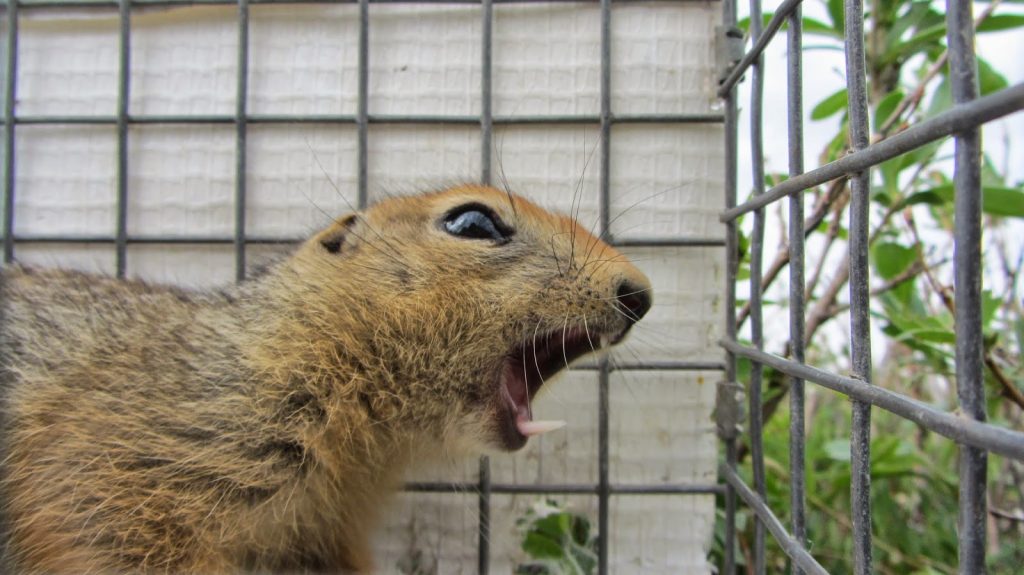
The Williams Lab leads a 30+ year study in the Alaskan Arctic, through which we have demonstrated that climate change is affecting the timing of freeze-thaw cycles in the active layer of permafrost soils which is altering the physiology and phenology of arctic ground squirrels. As part of this research, we are keenly interested in understanding how individual variability influences population resilience to environmental change. Resilience is linked to the potential for the evolution of new phenotypes, but we currently lack a robust framework for evaluating how molecular, physiological, behavioral, personality, and life-history traits will co-evolve under rapid environmental change. We have recently initiated a 5-year National Science Foundation funded research project (with co-PI Lise Aubry) that will address this gap in knowledge by applying broad life-history approaches to gain critical insights into the role of evolution versus phenotypic plasticity in driving correlations among phenotypic traits.

Picture
Photo by Victor Zhang

The Neurobiology of Phenological Responses


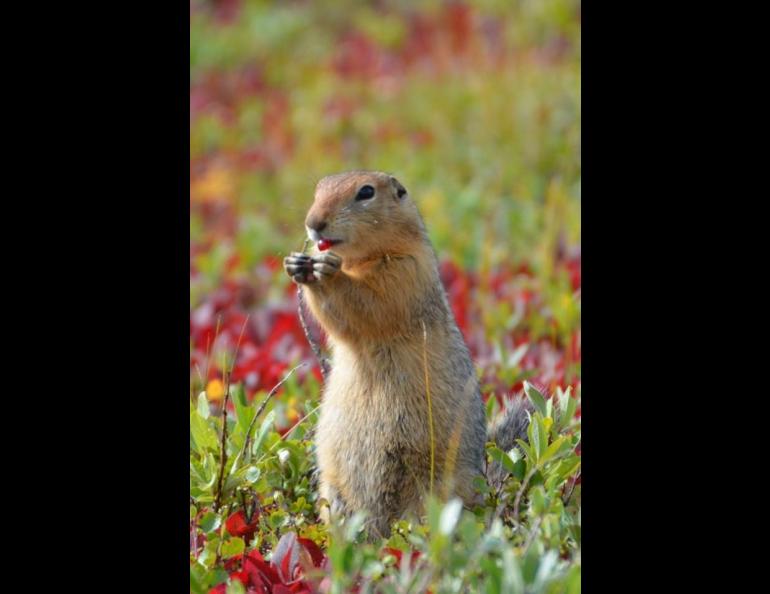
Shifts in the timing of cyclic seasonal life-history events are among the most common responses to climate change, with differences in response rates among interacting species leading to phenological mismatch. Within a species, however, males and females may also differ in sensitivity to environmental cues leading to differential responsiveness to climate change and, potentially, phenological mismatches between the sexes. Predicting species-specific or sex-specific responses to climate change is currently hampered by limited knowledge regarding the cues animals use to adjust timing, the endogenous genetic and molecular mechanisms that transduce cues into neural and endocrine signals, and the inherent capacity of animals to alter their circannual timing. Recently, the Williams Lab demonstrated sex-differences in phenological responses to climate change in arctic ground squirrels, with females advancing the spring active season by 10 days over 25 years and males showing no change. Meanwhile, our captive studies have demonstrated fundamental changes in the hypothalamus over the course of hibernation in continuous darkness – ground squirrels activate the retrograde thyrotropin/deiodinase/thyroid hormone pathway, remodel hypothalamic tanycytes, and initiate reproductive development. Ongoing work in the lab is taking advantage of sequencing approaches to better understand whether and how hypothalamic thyroid hormone signaling affects cellular remodeling and re-programming of brain circuits to facilitate energy rheostasis during life-history transitions.
Picture
Photo by Cory Williams

Maternal Foraging Strategies of Fur Seals


The Eastern Pacific Stock of northern fur seals has declined by more than two-thirds over the last half-century and pup production on St. Paul Island, the largest population, continues to decline. Although the exact causes of the current decline remain uncertain, food limitation in proximity to major rookeries may be contributing to low pup growth rates, survival, and recruitment. The Williams Lab is working in collaboration with NOAA, with funding provided by the North Pacific Research Board, to develop new tools to understand how changes in resource availability may be limiting reproductive output by altering central-place foraging strategies of lactating fur seals.

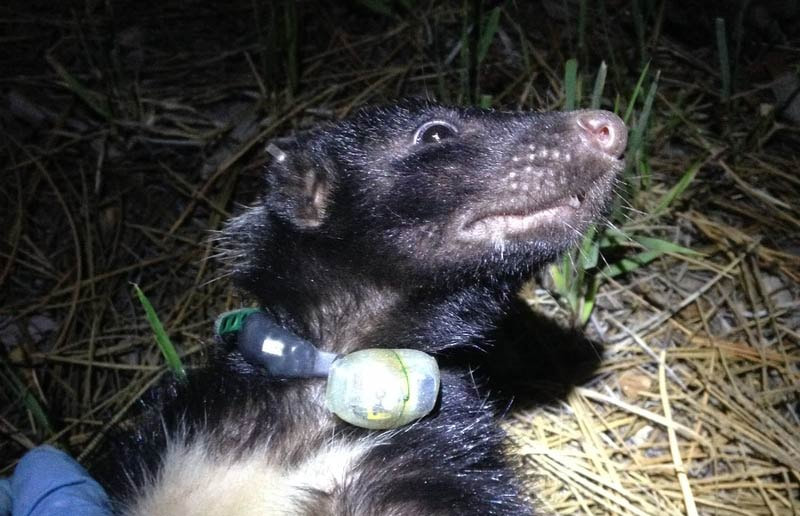
Prior studies have demonstrated that lactating females on St. Paul Island exhibit one of two foraging strategies – while the majority of females feed on neritic shelf-associated prey, a significant fraction consume pelagic prey beyond the shelf. However, we currently lack cost-effective, low disturbance methods to assess how variability in habitat use influences subsequent energy transmission to pups. As part of the current study, the Williams Lab is developing and validating the use of accelerometers on pups to assess the frequency and duration of suckling events. We will then link nursing data back to maternal habitat use assessed via stable isotope analyses. In collaboration with NOAA and the St. Paul Island Aleut Community, we are using satellite-telemetry data from lactating fur seals to validate accelerometry estimates of suckling only occur when the corresponding mother is present at the colony and that stable isotope data of pup tissues reflect maternal foraging habitat selection. We anticipate this novel approach will provide a more cost-effective means of linking maternal habitat use to reproductive outcomes for future large-scale studies.

Picture
Photo by Sarah Kerr

Niche Partitioning in Arctic Raptors


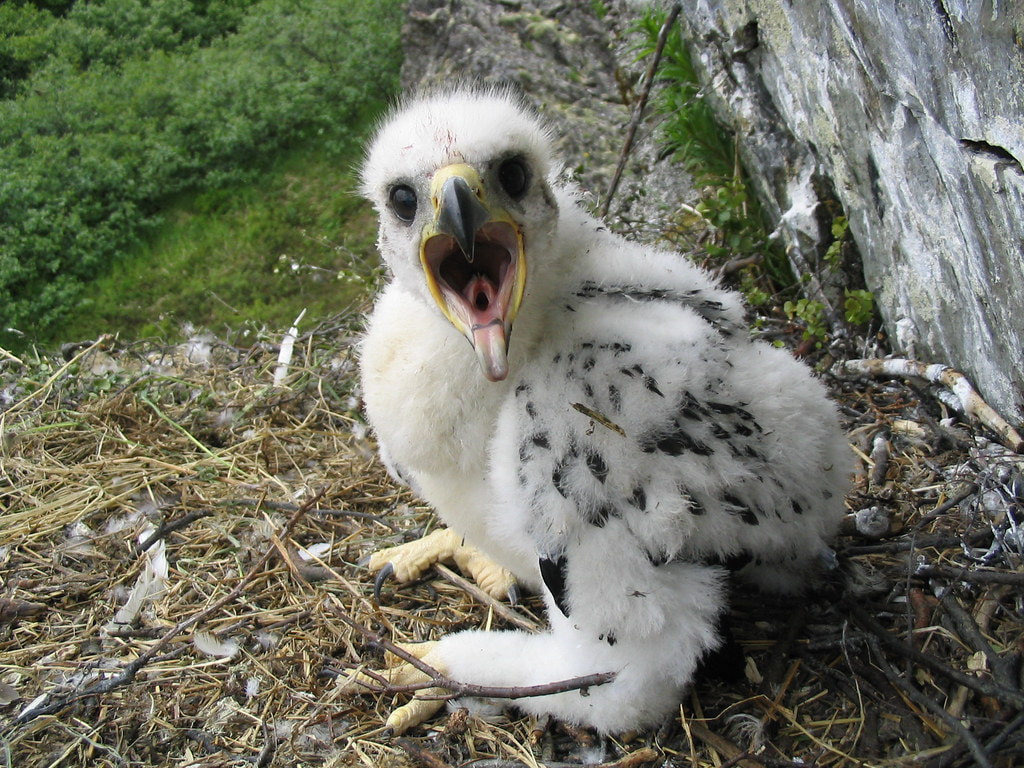
In collaboration with The Peregrine Fund and with the Alaska Department of Fish & Game, we used nest cameras and stable isotope analyses to investigate niche partitioning within the Arctic raptor guild on the Seward Peninsula in northwestern Alaska. This region is undergoing dramatic climate change owing to loss of sea ice surrounding the peninsula. As part of this work, we have developed a new technique that incorporates camera data to  improve diet estimation based on Bayesian stable isotope mixing models.

This project is now complete.
Picture
Photo by USFWS under CC-BY-NC-ND 2.0
Proudly powered by Weebly
  • Home
  • People
  • Research
  • Publications
  • Media/Outreach
  • Join us